
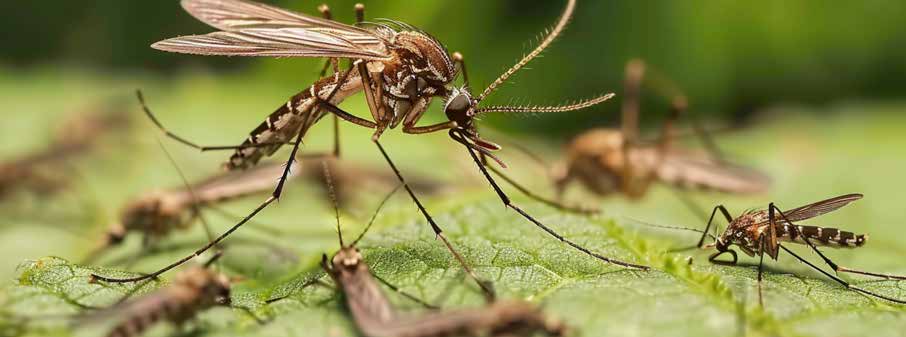
Black Saltmarsh Mosquitoes Challenge Collier County During a Difficult Summer
by Jonathon Little, MBA
Director of External Affairs
For residents of Collier County, summer often brings warm weather, afternoon storms, and an unwelcome visitor: the black saltmarsh mosquito (Aedes taeniorhynchus). This year has proven especially challenging, with environmental conditions creating ideal circumstances for one of Southwest Florida’s most aggressive nuisance mosquitoes. The result has been persistent swarms that have tested both residents’ patience and the Collier Mosquito Control District’s ability to keep mosquito populations at tolerable levels.
Unlike mosquitoes that breed in standing water around homes, black saltmarsh mosquitoes originate in coastal saltmarshes and mangrove forests stretching through Rookery Bay, the Ten Thousand Islands, and other protected coastal habitats. Females deposit their eggs in moist soil rather than open water, where the eggs can remain dormant for months or years until heavy rains or exceptionally high tides flood the marsh. When those conditions arrive, millions of eggs can hatch simultaneously, producing enormous broods in just a matter of days.
What makes this species particularly difficult to manage is its remarkable ability to travel. Adult black saltmarsh mosquitoes are powerful fliers capable of riding prevailing winds 40 to 60 miles inland. That means mosquitoes emerging far from neighborhoods can quickly invade communities throughout Collier County, even after local treatment efforts. Strong onshore and southeast winds this summer have repeatedly carried fresh waves of mosquitoes into populated areas, making control efforts short-lived as new broods continue to arrive.
The Collier Mosquito Control District has responded with an integrated mosquito management approach that combines surveillance, aircraft applications, ground treatments, and continuous monitoring. However, the District faces a unique challenge with black saltmarsh mosquitoes because much of their breeding habitat exists within environmentally sensitive state and federal conservation lands. These protected mangrove wetlands are not routinely treated for mosquito larvae, meaning control efforts must focus primarily on adult mosquitoes once they move into developed areas.
Despite these challenges, the District works daily to reduce mosquito populations and improve quality of life for residents. Scientists and field technicians monitor mosquito activity throughout the county, allowing treatments to be timed as effectively as possible. In particularly vulnerable communities near coastal breeding areas, additional control strategies, including targeted barrier treatments, help provide longer-lasting protection where appropriate.
While black saltmarsh mosquitoes are among Florida’s most aggressive biters, they are considered primarily a nuisance species rather than a significant disease vector. Their relentless daytime and evening biting can make outdoor activities nearly impossible during peak emergence periods, underscoring the importance of both professional mosquito control and personal protection. Residents can help reduce exposure by using EPA-approved insect repellents, wearing long sleeves when practical, and limiting outdoor activity during periods of intense mosquito activity.
As Collier County continues through the summer rainy season, weather patterns will remain the driving force behind black saltmarsh mosquito populations. Although the Collier Mosquito Control District cannot eliminate every mosquito emerging from thousands of acres of coastal marsh, its ongoing surveillance, science-based control efforts, and rapid response remain essential tools for keeping one of Southwest Florida’s most formidable seasonal pests under control.
To learn more or schedule a tour, please visit www.cmcd.org
For more information, visit cmcd.org or call 239-436-1000.
Anyone interested in learning more about the District’s disease monitoring efforts or touring the laboratory and other facilities can request a tour by emailing info@cmcd.org.
The Collier Mosquito Control District works to safeguard the health and well-being of our residents through the safest and most economical means available.
To learn more about the Florida Mosquito Control Association, visit their website at www.yourfmca.org.
To learn more about the District or to sign up to receive treatment notifications, visit our website at www.cmcd.org.
The Collier Mosquito Control District works to safeguard the health and wellbeing of our residents through the safest and most economical means available. If you would like more information about how we control mosquitoes, please visit our website at cmcd.org or call us 239-436-1000.


Leave a Reply
Want to join the discussion?Feel free to contribute!