

Traditions by Kristine Jordan, DHA, BSN, RN, NEA-BC
There is something reassuring about knowing what comes next.
The same recipe prepared every Thanksgiving. The ornaments that emerge from a battered box each December. The neighborhood drive to see holiday lights, the movie everyone can quote, the phone call made at the same time every year. These rituals may seem small, but together they create something powerful: a sense of order, belonging, and continuity in a world that rarely stays still.
Traditions are often mistaken for elaborate customs passed down through generations. They can be, but they do not have to be. A tradition is simply something meaningful that we choose to repeat. And perhaps that is why they matter so much during the holidays.
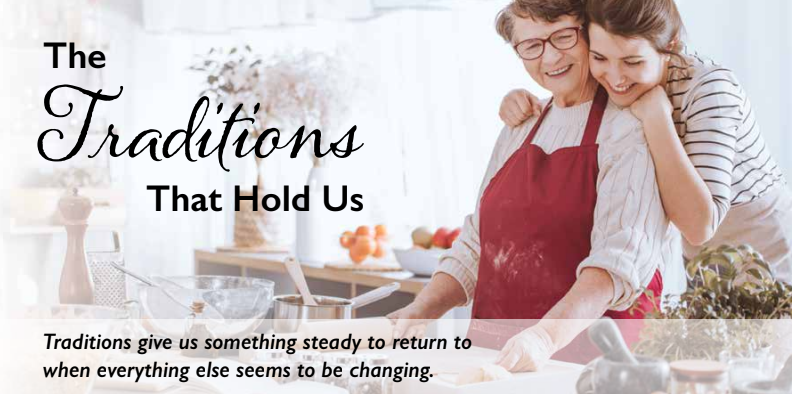
The holidays arrive with expectations of joy, but they also come during seasons of tremendous change. Children grow up. Families expand and contract. People move, relationships change, loved ones are lost, and familiar holiday tables inevitably look different over time. Traditions give us something steady to return to when everything else seems to be changing.
For young adults beginning lives of their own, this may be the perfect time to intentionally create a first tradition. Invite friends for a simple holiday dinner every December. Buy one ornament that represents the year. Make breakfast on Christmas morning before opening gifts. It does not need to be impressive. It only needs to be yours.
For families with children, traditions become part of the architecture of childhood. Pajamas on Christmas Eve, baking cookies with Grandma, volunteering together, reading the same story each year. Children may not remember every gift they received, but they often remember how their family made the holidays feel. Repetition creates anticipation, and anticipation is part of the magic.
Couples without children can sometimes find themselves navigating holidays built around other people’s family schedules. But this season belongs to them, too. A yearly getaway, hosting a beautiful dinner, choosing a cause to support together, or spending one gloriously quiet holiday morning with coffee and nowhere to be can become traditions every bit as meaningful.
And for older adults, traditions can provide both connection and continuity. Some may be the keepers of family customs, recipes, stories, and history. Others may be facing holidays that no longer look as they once did. This is where tradition can evolve rather than disappear. A large gathering might become brunch with a few loved ones. A treasured recipe can be taught to a grandchild. A longtime custom can be shared with a neighbor or friend.
Traditions should never become obligations that exhaust us or rules that prevent us from embracing change. The best ones grow with us.
Perhaps that is their greatest gift. In the midst of a season filled with movement, noise, and change, traditions quietly remind us: You belong somewhere. You have something to look forward to. Some things remain.
And sometimes, that is exactly the kind of joy we need.


Leave a Reply
Want to join the discussion?Feel free to contribute!