
Preparing for Salt Marsh Mosquito Season
by Jonathon Little, MBA
Director of External Affairs
Each year, as seasonal residents return north for the summer, Southwest Florida prepares to welcome a different kind of visitor. Thanks to Florida’s subtropical climate, mosquitoes are present year-round, but populations begin to increase significantly during the spring months.
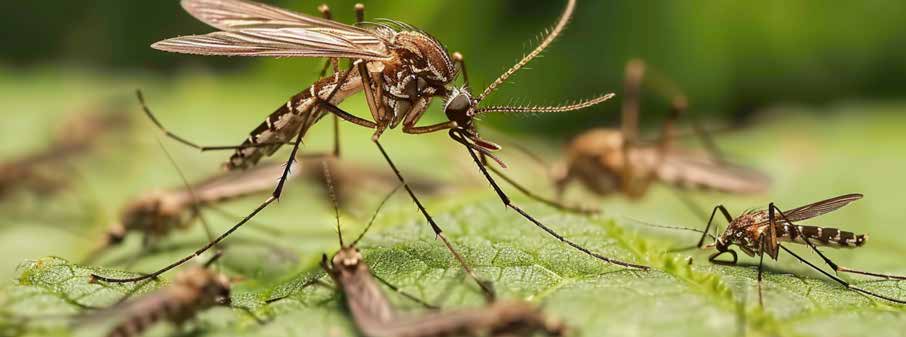
Late spring often marks the arrival of Aedes taeniorhynchus, commonly known as salt marsh mosquitoes. These mosquitoes lay their eggs in mangrove beds, where eggs can remain dormant for years. When high tides flood these areas, the eggs hatch all at once. Once they reach adulthood, large broods emerge from coastal areas and can be carried by prevailing winds up to 60 miles inland.
Salt marsh mosquitoes are not known to transmit disease, but they are extremely aggressive biters and can greatly impact quality of life. The Collier Mosquito Control District (the District) recommends using insect repellent and wearing long sleeves when possible, to reduce exposure. Their migratory nature makes salt marsh mosquitoes especially difficult to control.
District aircraft can treat mosquitoes present at the time of application, but during peak salt marsh season, new broods are continuously emerging from the coast, often replacing mosquitoes that were just treated.
Last year, we experienced the worst salt marsh mosquito season since at least 2017. A combination of unusually hightides and favorable weather conditions led to massive hatches, with mosquitoes emerging from coastal areas in extraordinary numbers. Residents reported mosquitoes arriving from the coast in dense waves that made outdoor activities nearly impossible at times.
Even with aggressive monitoring and treatment efforts, the season highlighted the challenge of controlling a species that breeds far from populated areas and travels long distances. As the summer rainy season continues, disease-carrying mosquitoes that breed in standing water become more prevalent.
Unlike salt marsh mosquitoes, these species often breed close to homes, giving residents an opportunity to help reduce their numbers. Maintaining pools and fountains, emptying containers that collect water, and addressing areas where water stands can make a significant difference.
Mosquitoes can lay eggs in as little water as a bottle cap. For standing water that cannot be drained, residents may request free mosquito-eating fish from the District.
While salt marsh mosquitoes are primarily a nuisance, species such as Aedes aegypti, Aedes albopictus, Culex nigripalpus, and Culex quinquefasciatus pose serious public health concerns. Aedes mosquitoes can transmit diseases such as dengue and yellow fever, while Culex mosquitoes can carry West Nile virus and encephalitis.
Dengue cases have increased steadily in Florida over the past several years, leading many experts to believe the virus may now be endemic to the state. Increased travel between Florida and areas experiencing outbreaks, including Puerto Rico, raises the likelihood of continued cases statewide.
Throughout the summer, the District monitors Collier County daily to identify problem areas and respond quickly. Residents can also help by following the “Four Ds”: Drain standing water, Dress to cover exposed skin, Defend with EPA-approved repellents, and limit outdoor activity at Dusk and Dawn.
For more information, visit cmcd.org or call 239-436-1000. Anyone interested in learning more about the District’s disease monitoring efforts or touring the laboratory and other facilities can request a tour by emailing info@cmcd.org.
The Collier Mosquito Control District works to safeguard the health and well-being of our residents through the safest and most economical means available.
To learn more about the Florida Mosquito Control Association, visit their website at www.yourfmca.org.
To learn more about the District or to sign up to receive treatment notifications, visit our website at www.cmcd.org.
The Collier Mosquito Control District works to safeguard the health and wellbeing of our residents through the safest and most economical means available.
If you would like more information about how we control mosquitoes, please visit our website at cmcd.org or call us 239-436-1000.


Leave a Reply
Want to join the discussion?Feel free to contribute!