

Daily Exercises for Prevention

by Paula Allia PT, DHSc, MTC, OCS
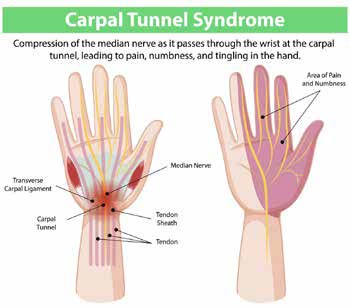
Carpal tunnel syndrome (CTS) is a problem that is caused by the compression of the median nerve at the level of the wrist. It is often caused by repetitive motion of the wrist and forearm. Several causes can be given for this syndrome however many times this nerve can actually be compressed even above the wrist up to the neck.
These reasons can be due to disc problems, bone spurs in the neck, postural faults, and tightness and lack of flexibility through the arm.
Symptoms of night pain, tingling and numbness in the wrist and first 3-4 fingers can occur. If not addressed and compression progresses one may actually experience weakness and functional limitations in the hand and fingers.
The key to CTS is to avoid it and treat it prophylactically. The best thing that one can do is practice good body posture while keeping joints flexible and the muscles strong.
The median nerve can get entrapped at the wrist by a band called the retinaculum. It is not uncommon that this nerve may also be tight along the forearm and could have limitations all the way up to levels in the cervical spine (neck). This nerve supplies the ability for strength to the functions in the forearm and hand. The nerve exits from multiple levels in the spine starting with cervical levels in the neck, C5 and C6.
Keeping this in mind, postural faults may affect the median nerve as it exits from the spine. The C5-C6 level in the spine is one of the most commonly injured levels in the neck region. Below this level is more bound down with myofascial and muscular connections. This level gets strained and often becomes susceptible to insult from faulty posture and overuse in this area.
If postural issues (which are common) exist, tightness and restrictions of fluidity down the arm can ensue.
Many daily activities can cumulatively affect the median nerve and the muscles that it innervates. A nerve exits the spine from the spinal cord and supplies certain regions with both sensory and motor support. If the nerve is not bound down anywhere along its route, the function of this nerve should be optimal, thus receiving sensory information and supplying proper motor responses for normal function.
Imagine if there is a kink or restriction in that nerve for any reason. This could strain the optimal responses of the nerve causing strain and overuse and even swelling at the wrist where the nerve enters into the hand.
The key to keeping the median nerve firing normally is to give it the best situation to function. Eliminating restrictions while having normal muscle and nerve gliding will help the nerve function more optimally.
 There are several exercises that can be done to promote healthy posture while keeping joints and muscles flexible.
Posture: Sitting up straight, looking forward with ears in line with the shoulders. Maintaining good posture helps you to strengthen the proper muscles.
Stretching the forearm, wrist and finger muscles: This is done by bringing the muscles to a tolerable stretched position while also stretching the joints. This can be held for 30 seconds. No numbness or tingling should occur and if it does stop.
Nerve flossing: This is done to help the median nerve glide in the tissue of the arm and wrist so as to avoid becoming bound down. This is done slowly and the position is never held but done repetitively for up to 10 times.
To Your Health!


Leave a Reply
Want to join the discussion?Feel free to contribute!