
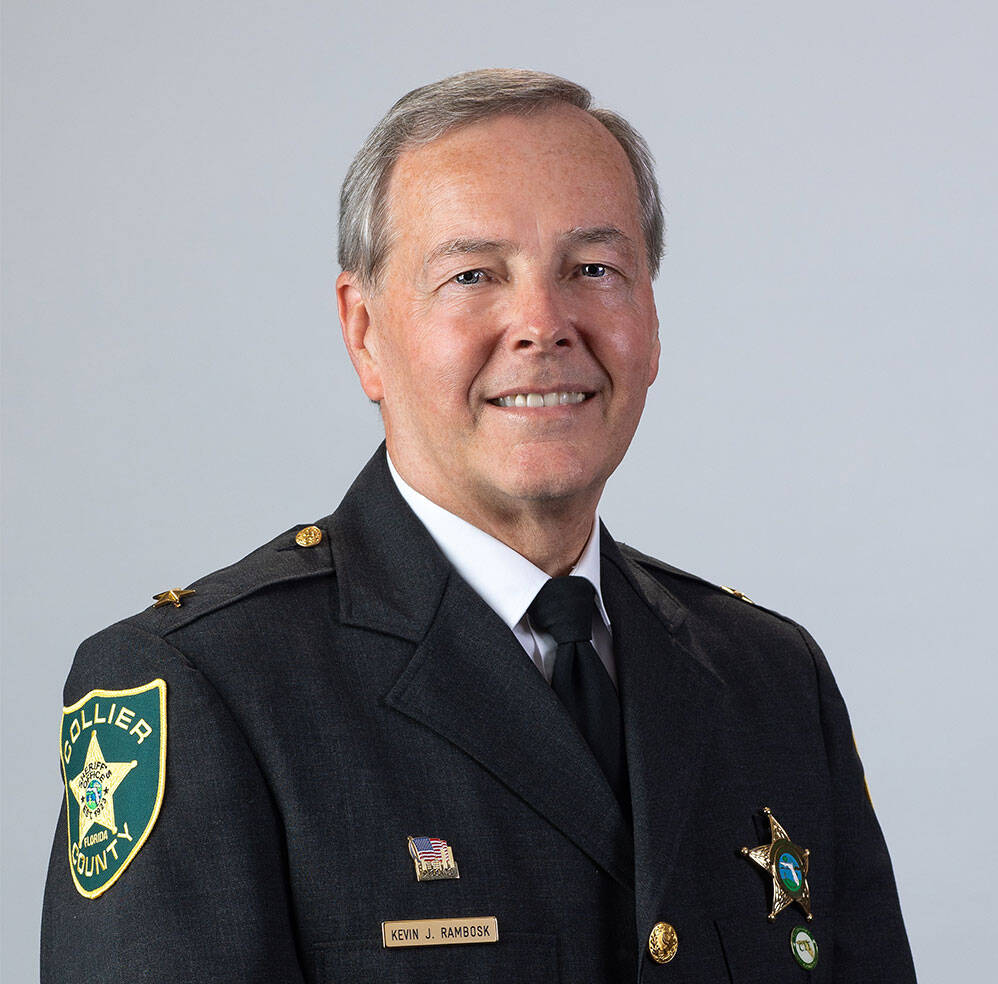
Warning from Sheriff Kevin Rambosk – Don’t Fall for Romance Scams
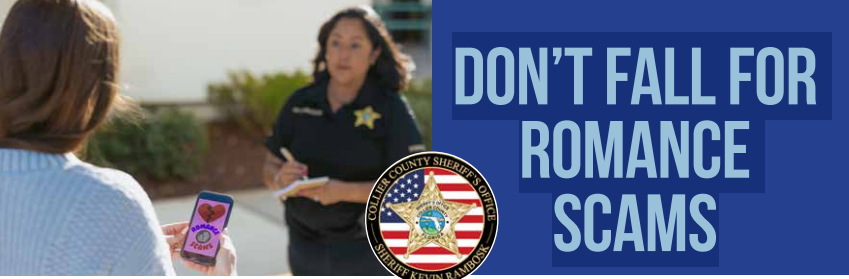
Your new love interest asked for money urgently or to “invest” it. Say no. It’s a romance scam. Never send money or gifts to a sweetheart you haven’t met in person. If you suspect a romance scam, stop communicating with the person immediately.
Valentine’s Day comes once a year, but romance scammers work their schemes every day. The Collier County Sheriff ’s Office wants to help keep you and the people you care about safe from them. “Romance scammers don’t just go after your wallet; they go after your heart,” Sheriff Kevin Rambosk said. “These scams are among the most emotionally devastating and financially damaging that we see.”
In 2024, nearly 18,000 romance scam complaints from across the U.S. were reported to the FBI’s Internet Crime Complaint Center (IC3), with losses topping $670 million, according to the FBI’s 2024 Internet Crime Report. People over the age of 60 were hit hardest, reporting nearly $390 million in losses and the highest number of complaints.
Romance scammers prey on vulnerability. They create fake profiles, often on social media or dating sites, and build what feels like a real emotional connection. Once trust is established, the requests for money begin.
They adjust their stories to fit the situation. They may say they can’t meet in person because they are living or traveling outside the country, or working on an oil rig, or in the military. Eventually, they’ll ask for help paying for a medical emergency, travel expenses or another urgent need, promising to pay you back. But they never do.
They’ll also tell you how to pay, usually in ways that are difficult or impossible to reverse. That might include wiring money, buying gift cards and sharing the PINs, sending money through a money transfer app, or transferring cryptocurrency. The goal is to pressure you to act quickly.
Victims are often reluctant to report these scams because they are embarrassed that they were duped and have become emotionally and financially invested in the relationship.
Here’s how to protect yourself and your loved ones:
• Never send money to someone you haven’t met in person.
• Never share your personal and financial information.
• Research the person’s photo and profile using online searches to see if they appear elsewhere.
• Be mindful of what you share publicly on social media.
• Be cautious of someone who seems too perfect, or who quickly pushes you to move the conversation off a dating or social platform.
• Understand that video calls and messaging applications are not enough proof of their real identity.
• Be suspicious of repeated excuses for why they can’t meet in person, especially after several months.
• If you suspect a romance scam, stop communicating with the person immediately and file a complaint with the IC3 at www.ic3.gov.
• If you’ve already sent money with a gift card, wire transfer, credit or debit card, or cryptocurrency, contact your bank or the company involved right away and report it to law enforcement. For assistance with any suspicious encounter involving a request for money or personal information, you can contact the Collier County Sheriff ’s Office’s Fraud Hotline 239.252.2255. The hotline is staffed by a CCSO deputy in the Financial Crimes Bureau between 8 a.m. and 4 p.m. Monday through Friday.
Listen wherever you get your podcasts or stream it on SoundCloud


Leave a Reply
Want to join the discussion?Feel free to contribute!