
Repetitive Motions Affecting the Aging Scoliotic Spine

by Paula Allia PT, DHSc, MTC, OCS
Scoliosis is a medical term that explains a lateral curvature of the spine that is not normal. This curvature can be functional or structural. A structural curvature involves a true lateral curvature that involves some degree of rotation. A functional or nonstructural curvature is usually due to a postural issue or the body adjusting itself to a problem such as an acute herniated disc, muscle imbalances, or a leg length discrepancy. Anyone may be subject to these functional issues with aging.
If a functional curve is not addressed and corrected, it can, over time, become more structural by abnormally fusing or degenerating.
Participating in sports many times involves repetitive motions. Examples are swinging a golf club or tennis racket. There is repetition in all activities. Stronger movement to a more dominant side can occur. Over time, repetitive motions can cause imbalances and movements become compensated. Even a small leg length discrepancy may cause compensatory curvatures as well.
The curvatures with repetitive activities have various compressive components that lead to wear and tear and degenerative issues over time. It is not uncommon for someone to have imbalances that lead to a functional scoliosis.
Actually, with structural scoliosis, imbalances will also occur due to the altered movements of the spine. The key is recognizing that the body symmetry is different. Some of the common findings are:
- Leg length discrepancies
- Ribs more prominent on one side versus the other
- One shoulder higher
- One side of the pelvis being higher than the other
- A side bending in the spine with or without rotation
The repetitive motions affect muscle balance. Some muscles get worked more on one side of the body. This causes asymmetry with some areas being tight and compressed while other areas are more stretched and weak.
These imbalances need to be counteracted by using the other side in a similar manner to balance it out.
There are specific exercises that can be done to address imbalances. First, if recognized early, a small lift can be used in the shoe to level the pelvis more so that the spine is more balanced at the start. This should be directed by someone who is familiar with this problem. Second, discovering where the curvatures are and exercising the body appropriately can help mediate the overuse in one direction. Third, the areas on the concave side of the curvature may need to be stretched out while the muscles on the convex side need to be strengthened.
It is important to attempt improved body symmetry while creating spinal and pelvis balance for longevity. In addition to trunk modifications with scoliosis the lower extremities may develop tightness and limitations in excursion and flexibility.
Conversely, leg joints may be hyper mobile resulting in muscles being overstretched and not as controlling as they need to be.
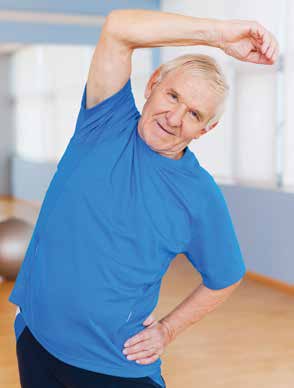
Sitting to perform exercises can help the pelvis stabilize and also removes the leg length issues. First, it is important to have good mobility in the ribs. The ribs need the ability to rotate with every breath. Stretch the side that is concave and lean on the opposite arm to hold the position while supported for 30 second stretches.
Adding slow but full deep breaths can allow better excursion for the ribs themselves. Soft foam rolls can be used during workouts. Centering while lying down on a foam roll can give you tactile feedback of your positioning.
Considerations of which sporting activities that one performs regularly with a scoliotic curvature should be considered. At the very least, make attempts to minimize the possible detriments by performing counteractive exercise. Keep moving, just be aware and take care of the body so that it lasts.
Here’s to your health!

Leave a Reply
Want to join the discussion?Feel free to contribute!