
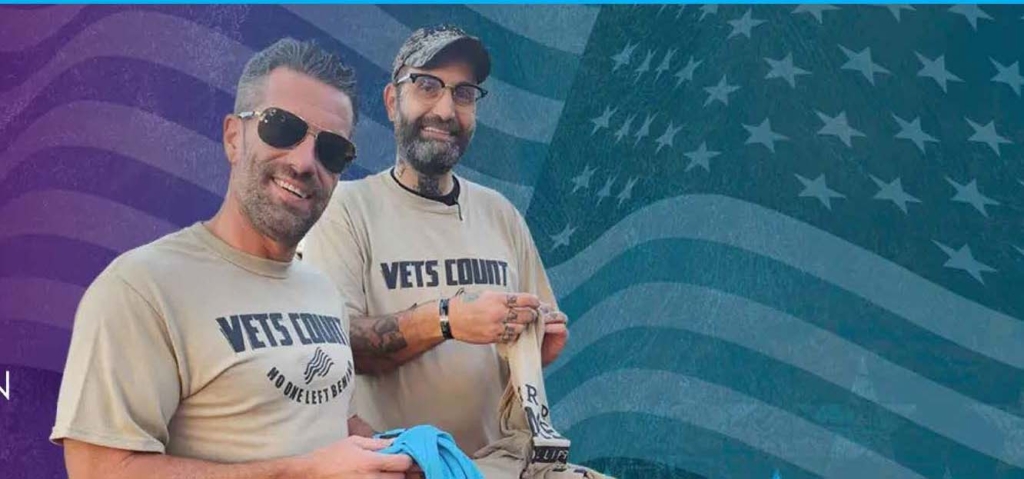
It’s the First Step Toward Changing Lives
 by Aaron Schultz
Warrior Homes of Collier
For many veterans, the transition from the military back to civilian life can be devastating. Tens of thousands across the nation are currently homeless.
Some sources cite nearly 20% of combat vets turning to heavy drinking and drugs, driven by post-traumatic stress disorder (PTSD) and adjustment challenges, with many struggling to get help due to the stigma of substance use and addiction. Rates are much higher for specific subgroups – up to 70% for homeless veterans.
This matter doesn’t limit itself to areas outside of Southwest Florida and Collier County. That’s why Dale Mullin, founder of Warrior Homes of Collier, Inc. stepped up six years ago to working a solution that began with a modest building in the quiet River Park neighborhood in Naples, FL.
Seeing the Need
Mullin, a Vietnam War U.S. Army veteran and retired business executive, first learned about the needs of local veterans from Collier County Judge Janeice Martin. When Mullin met Martin in2019, she oversaw the County’s diversion courts for mental health, substance abuse and veterans – many of whom were struggling with PTSD and the adjustment to civilian life. Martin identified transitional housing as the number one barrier to rehabilitating veterans in any of the diversion programs.
“A number of otherwise eligible veterans were not able to take advantage of what we offered because they couldn’t secure housing or transportation to and from the recovery centers,” Martin explained.
The need was great, Martin said. There were effectively two dozen veterans in the court’s program at their highwater mark. Incarcerated veterans could not be moved to the court’s veteran treatment program without a physical address to go to, which was tying up not only taxpayer dollars, but jail space needed for violent offenders.
Simply put, Collier County needed beds for veterans.
What started as a conversation over breakfast became a leas eon a building just four months later. “It was a pivotal conversation, and I don’t think either of us realized just how pivotal at the time,” Martin said. For Mullin, the charge to fill the need had begun, and Alpha House was born.
Finding a Place
According to the National Alliance of Recovery Residences (NARR), recovery homes can be grouped into one of four levels of homes, with the first type involving homes that are peer-run. One study from the National Institutes of Health cites that many individuals who complete substance abuse treatment are released back into the community without the social, psychological and environmental support needed for long term recovery.
Holding fast to a housing-first model, Mullin’s philosophy remains that the path to turning at-risk veterans into productive members of society is much more than just putting a roof over their heads. His team removes barriers to day-to-day survival by providing food and clothing, transportation, connections to employment, education and access to health and dental care.
“We give them a safe haven where they can take the steps to work on themselves and a community of like-minded people,” Mullin said. “We tell them we are going to hold them to a higher standard, and we make them accountable. They need to know someone cares.”
A Place that Cares
Alex Kane knows someone cares. The former Navy officer found himself on the street after being arrested seven times for misdemeanor alcohol-related offenses and pawning off all his belongings for drug money. Five years later, in 2022, after countless stints in and out of rehab and failed attempts at recovery, Alex found himself waiting for an opening in yet another recovery program when his therapist told him about Warrior Homes’ transitional living house specifically for veterans.
“I didn’t want another sober living house,” Alex said, “they had all failed.” But with nowhere left to go and Warrior Homes offering a ride to Alpha House and 24/7 support, a plan was solidified.
“That decision was the best one I ever made,” Alex stated emphatically. “The camaraderie, the amount of love I felt from everyone at Alpha House was incredible. That gave me a lot of hope. Also, they held me accountable. They helped me get my GI Bill together to get my master’s degree in mental health counseling, and I began to develop that veteran identity.”
Today, more than three years sober, Alex lives a life of service again. On Dec. 29 he became a full-time employee at David Lawrence Center as a mental health clinician.
“I found purpose in helping people struggling, especially veterans,” he said. Of Warrior Homes Alex said, “I would never be here without this program, and the start Alpha House gave me. It really did save my life…Looking back, I’m so grateful and all of it brought me to the moment I’m in now.”
A Supportive Community
Alpha House serves as a vital refuge for homeless veterans, providing them with not only shelter but also a supportive community aimed at reintegration into society. To date, it has housed 47 local veterans who stay on average for six months. The average age is 57 years old. The residents of Alpha House come from diverse backgrounds, each with their own unique stories of service and struggle.
At Alpha House, these veterans find a sense of camaraderie and understanding among peers who have shared similar experiences. Overall, these once-homeless men exemplify resilience and determination, as they work toward a brighter future, supported by a one-of-a-kind community that values their sacrifices and contributions.
About the Author
Aaron Schultz is the director of operations for Warrior Homes of Collier. He is a U.S. Army veteran who served in the South Dakota National Guard for over 29 years, including deployments to the Middle East during Operation Desert Storm and Operation Enduring Freedom.


Leave a Reply
Want to join the discussion?Feel free to contribute!